Drag · Scroll to zoom · Double-click to reset
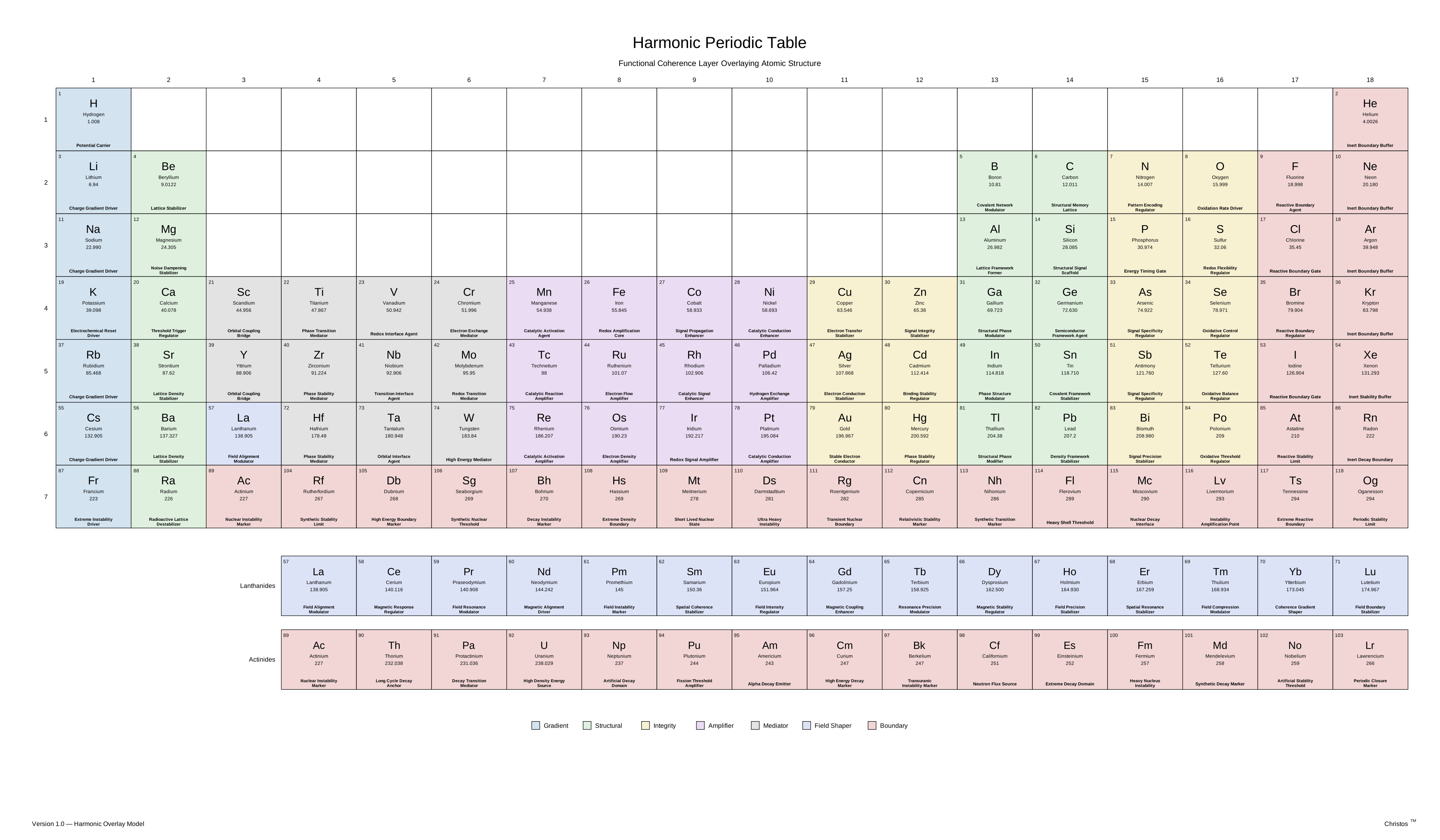
The complete 118-element periodic table extended with the Christos™ Harmonic framework — coherence classifications, dimensional assignments, Solfeggio frequency signatures, and functional roles for every element in the known universe.
The standard periodic table organizes elements by atomic number and electron configuration. These are accurate and useful classifications — but they describe only the physical substrate of matter. They say nothing about how each element behaves as a coherence structure, which dimensional layer it primarily expresses, what its Solfeggio resonance frequency is, or whether it supports or disrupts coherence in biological and technological systems.
The Christos™ Harmonic Periodic Table adds a functional coherence layer on top of the standard atomic structure. Every element is classified by its coherence class (Class I High-Coherence Conductors, Class II Structural, Class III Disruptors), its dimensional assignment across the 12-layer architecture, and its Solfeggio frequency signature where applicable.
This classification system is the foundation of the Christos™ materials science framework — determining which elements are used in healing fluid formulations, crystal arrays, phi-ratio structural alloys, and the full technology suite.